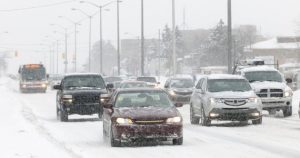

Thousands of people are killed or injured each year by drunk drivers. The National Transportation Safety Board recommended that the states reduce the allowable blood-alcohol concentration to 0.05% from 0.08%.
The current limit was established nearly 10 years ago. The standard has decreased the number of deaths by about 10,000 per year. According to Deborah A.P. Hersman, the chairwoman on the board, foreign countries with stricter standards have had substantially more success. The board voted for a variety of recommendations. Some of which require anyone convicted of drunken driving to install a breathalyzer interlock in their car, which would prevent the car from starting without an alcohol test.
Sarah Longwell, managing director at the American Beverage Institute, a restaurant trade association, called the idea “ludicrous”. She argues that if moved from 0.08% to 0.05% we would criminalize perfectly responsible behavior. She also argues that this will also do nothing to stop hard-core drunk drivers from getting behind the wheel.
If you or a loved one have been seriously injured in a motor vehicle accident involving a drunk driver, contact us immediately.
People with a BAC of 0.05% are 38% more likely to be involved in a crash than those who have not been drinking. People with a BAC of 0.08% are 169% more likely. About 30% of all vehicle fatalities are tied to drunken driving, down from 50% when President Reagan raised the issue 30 years ago. The number of deaths is down to about 10,000 a year from about 21,000 over the same time period.
Read the full article here: http://www.nytimes.com/2013/05/15/us/legal-limit-drunken-driving-safety-board.html?hp&_r=0
Share this post with friends:
On Wednesday, May 15, The FDA approved a new, lower-dose labeling for the popular sleep drug, Ambien, in an effort to decrease daytime drowsiness that could potentially be a danger while performing certain tasks such as driving.
In January, drugs containing zolpidem must carry instructions that lower the recommended dose and provide more safety information to patients. “FDA has approved these changes because of the known risk of next-morning impairment with these drugs,” the agency said. “The purpose of the lowering is to help decrease the risk of next-morning impairment of activities that require alertness,” Dr. Ellis Unger, director of the Office of Drug Evaluation said. “We’re particularly concerned about driving. A large fraction of the population drives and driving is an inherently dangerous activity.”
By lowering the nighttime dosage of the drug, there will be less residual drug in the blood come morning. The recommended doses for women should be cut in half from 10 milligrams to 5 milligrams for immediate release products (Ambien, Edluar and Zolpimist) and 12.5 mg to 6.25 mg for extended-release products (Ambien CR). For men, the agency has asked manufacturers to change the labeling to recommend that doctors prescribe 5 mg for immediate-release products and 6.25 mg for extended-release products. Unger said that “women appear to be more susceptible to risk for next-morning impairment because they eliminate zolpidem from their bodies more slowly.”
The FDA will be requiring driving-simulation studies for new sleep medications, and it is assessing other insomnia medications on the market.
Contact us for a free case appraisal.
Read the full article here: http://www.myfoxny.com/story/20555579/fda-lower-ambiens-dose-to-prevent-drowsy-driving
Image provided by: http://abcnews.go.com/Health/fda-recommends-slashing-sleeping-pill-dosage-half-women/story?id=18182165
Share this post with friends:
Sprint currently provides an app that can help ease the mind of parents with teenage drivers. Sprint’s Drive First app is an app that will automatically lock a mobile phone when a car is in motion.
What Does The App Do?
- Automatically activates when the phone is in motion.
- Prevents texts, calls, and other unsafe distractions by silencing these alerts.
- 911 can override in emergency situations.
- Disables the functionality of the phone.
- Directs incoming calls to voicemail.
Get The Facts
- Drivers who use handheld devices while driving are 4 times more likely to get into crashes serious enough to injure themselves.
- Each day more than 16 people are killed and more than 1,300 are injured in crashes involving a distracted driver.
- You are 23 times more likely to crash if you are texting while driving.
If you are interested in having us speak at your child’s school as a part of our Commit to Quit texting and driving program, please visit: http://lawampm.com/community-relations/commit-to-quit
Download the app for a free trial and learn more about the app here: https://drivefirst.sprint.com/welcome.htm
Image provided by www.sprint.com
Share this post with friends:
There’s an app for that. Researchers from the University of North Carolina found that the first phase of driving alone is the deadliest phase. A recent survey from a major insurance company found that 65% of parents wanted a better way to keep track of their teens’ early driving experience. The new app from UNC is called Time to Drive. It focuses on some of the things new drivers struggle with.
According to the developers of the app, a critically important piece of a driver’s licensing process is the learner stage. During this stage, new drivers are required to spend 6-12 months and a certain number of hours practicing under the supervision of a licensed adult. The app can assist in this process.
Image provided by www.timetodriveapp.com
What Does The App Do?
- Records the amount of driving and conditions – it will generate a log which you can provide to the DMV.
- Keeps track of hard stops.
- Provides parents with tips.
- Encourages the parent-teen team to meet driving goals.
- Shows a map of past trips.
- Helps make sure your teens gets lots of driving practice so he or she can become a safe driver.
Contact us 24/7 for a free case appraisal.
Sources: Fox News: Apps to Track Teens’ Driving Habits, Time to Drive App
Share this post with friends:
With the rescue of three women in Cleveland who were abducted nearly a decade ago, comes fresh concerns for parents.
Abduction is every parent’s worst nightmare, but day-to-day activities can be dangerous as well.
Amanda Berry was 16 when she went missing in 2003 after leaving her job at a Burger King. Georgina “Gina” DeJesus was 14 when she disappeared in 2004 while walking home from school. Michelle Knight was 20 when she vanished in 2002.
The freedom that 11-17-year-olds have can unfortunately put them at risk of being snatched, according to Nancy McBride, a national safety director for the National Center for Missing & Exploited Children.
The group offers these guidelines to parents to help keep kids of all ages safe:
- Talk to your kids about recognizing and avoiding potentially dangerous situations. Make sure they know to avoid people they don’t know or who may make them feel uncomfortable.
- Instruct them to always take a friend when going places or stay with a group while attending school outings.
- Teach them the appropriate steps to take if approached or followed. Make sure they know to draw attention to themselves if they are touched or grabbed.
- Instruct them to get away from any uncomfortable situations or people as quickly as possible. Teach them to do whatever they can to get away from the person – kicking, screaming, biting is OK.
- Teach them that just because someone tries to engage them in conversation doesn’t mean they should talk to that person or forget their safety rules. Tell them to trust their instincts if someone is making them feel uncomfortable.
- Discuss safety issues with your children so they will understand the need for precautions.
- Get to know your childcare providers, neighbors, coworkers and employees.
- Provide supervision and monitor kids’ activities and schedules.
- Make sure your child knows where he/she is allowed to go and visit and at what times of day.
- Communicate with them and listen to them.
Contact us 24/7 for a free case appraisal.
If you think you have seen a missing child, please call The National Center for Missing & Exploited Children at 1-800-843-5678.
Read the full article and get the safety tips here: http://www.usatoday.com/story/news/nation/2013/05/07/missing-children-safety/2142521/
Share this post with friends: